
Why this confusing Spanish expression is actually your secret weapon for natural conversations
The Expression That Had Me Stumped
In Spanish, people are constantly “falling well” or “falling badly” on each other.
For the longest time, this had me completely confused. I’d hear it everywhere – in conversations with friends, in movies, and especially on those wonderfully dramatic Mexican morning talk shows that seem to tackle every possible human emotion before 10 AM.
It took a while for this expression to click for me, even though I kept hearing it on TV. But there’s one particular image that’s forever stuck in my head: a beautiful Mexican talk-show hostess getting very emotional and declaring, “¡No me cae bien ese hombre!”
The passion in her voice, the dramatic pause, the way the audience reacted – it was clear this phrase packed a punch. And that’s when it finally clicked for me.
The Lightbulb Moment
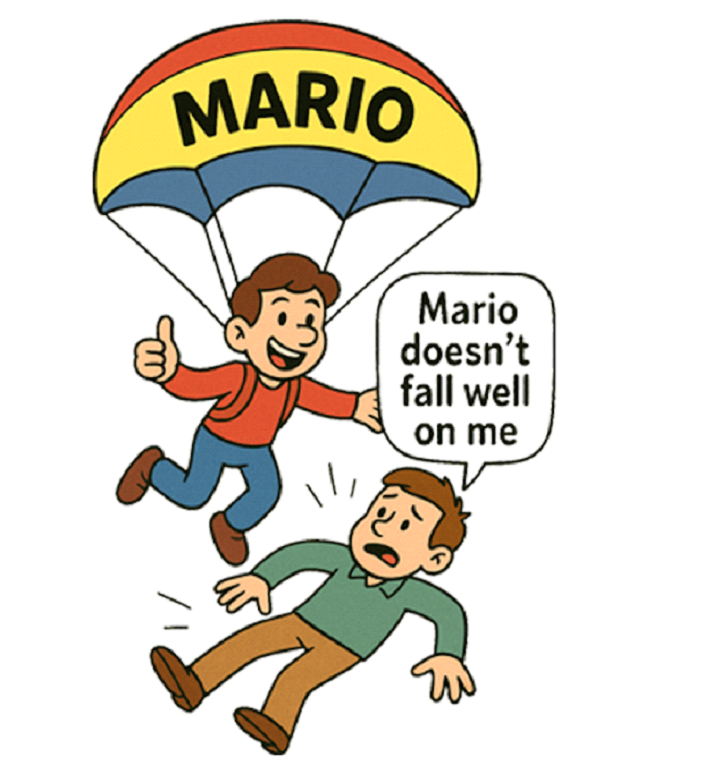
So what does it all mean? Let’s see if we can plant the same image in your head that helped this interesting Spanish expression click for me.
“No me cae bien Mario.”

In Spanish, “No me cae bien” literally means “On me he doesn’t fall well,” but it’s how you say “I don’t like him.”
Word-for-word translation? “Mario doesn’t fall well on me.”
But what Spanish speakers are really saying? “I don’t like Mario.”
Why This Expression is Pure Poetry
This is exactly why I love Spanish. Like when we say “it’s raining cats and dogs” in English, we instantly know it means it’s pouring buckets – but there are definitely no furry friends falling from the sky. Spanish has these same magical, visual moments that make the language come alive.
The beauty of “caer bien/mal” is in its metaphor. Think about it: when someone “falls well” on you, they land gently, comfortably. When someone “falls badly” on you, it’s jarring, uncomfortable, maybe even painful. It’s such an intuitive way to express how people affect us.
The Positive Side: Making Friends “Fall Well”
You can absolutely use this expression positively:
“Me cae bien María.” = “I like María.” (Literally: “María falls well on me.”)
Here’s how you’d hear it in everyday conversation:
“Mi profesor de español me cae bien.” (My Spanish teacher falls well on me = I like my Spanish teacher.)
“¿Cómo te cae tu nuevo jefe?” (How does your new boss fall on you? = What do you think of your new boss?)
“Esa chica me cae súper bien.” (That girl falls super well on me = I really like that girl.)
Cultural Context: Why You Hear This Everywhere
In Latin American culture, especially in Mexico, relationships and personal connections are everything. This expression gets to the heart of how people relate to each other on a gut level. It’s not just about whether you logically think someone is a good person – it’s about that instinctive, emotional reaction you have to someone’s presence.
That’s why you’ll hear it constantly on those telenovelas and talk shows. When characters are discussing relationship drama, family conflicts, or workplace tension, “caer bien” or “caer mal” captures that immediate, visceral reaction better than a simple “me gusta” (I like).
Variations and Intensity Levels
Like most Spanish expressions, you can dial up or down the intensity:
Mild dislike:
⦁ “No me cae muy bien” (He/she doesn’t fall very well on me)
Strong dislike:
⦁ “Me cae súper mal” (He/she falls super badly on me)
⦁ “Me cae fatal” (He/she falls terribly on me)
Really strong like:
⦁ “Me cae de maravilla” (He/she falls wonderfully on me)
⦁ “Me cae padrísimo” (He/she falls awesome on me – very Mexican)
The Secret to Natural Spanish: Visual Memory
This is where the magic happens in language learning. When you can see the picture – Mario parachuting down, someone “falling” on you – you never forget it. It becomes part of your mental vocabulary in a way that memorizing “caer bien = to like someone” never could.
These visual, poetic expressions are what separate textbook Spanish from the language people actually speak. They’re the difference between sounding like a tourist reading from a phrasebook and sounding like someone who really understands the culture.
Practice: Start Using It Today
Here are some scenarios where you can practice:
At work: “Mi nuevo compañero de trabajo me cae bien.” (I like my new coworker.)
About celebrities: “Ese actor no me cae nada bien.” (I really don’t like that actor.)
Meeting new people: “¿Cómo te cayó mi hermana?” (What did you think of my sister?)
About teachers or bosses: “El profesor de matemáticas me cae mal.” (I don’t like the math teacher.)
Why This Matters for Your Spanish Journey
Learning expressions like “caer bien” isn’t just about adding vocabulary – it’s about understanding how Spanish speakers actually think and express themselves. When you use these natural expressions, several things happen:
⦁ You sound more natural – People immediately notice you’re not just translating from English
⦁ You understand more – Suddenly those fast conversations make more sense
⦁ You connect better – Using culturally authentic expressions shows respect for the language
⦁ You remember better – Visual expressions stick in your memory much longer
Your Next Step
The next time you’re watching a Spanish movie, telenovela, or talk show, listen for “caer bien” and “caer mal.” Notice how the characters use it, what situations bring it up, and the emotions behind it.
Even better, try using it in your next conversation with a Spanish speaker. I guarantee they’ll light up when they hear you using such a natural, authentic expression.
Remember: once you see the picture of someone “falling” on you – whether gently or roughly – you’ll never forget what this expression means. And that’s the kind of learning that sticks with you forever.
¿Te cae bien este post? (Do you like this post?)
Want to learn more visual Spanish expressions like this? These are exactly the kind of natural phrases that make all the difference in real conversations. When you understand the pictures behind the words, Spanish becomes not just easier to remember, but genuinely fun to use.
See more at www.spanishgenius.com





Reminds me of the similar English version or expression: He doesn’t sit well with me. or having to do a task that you consider as unpleasant “That doesn’t sit well with me”